Merry SVG: A Designer’s Honest Take for Embroidery Projects
When I first opened the Merry SVG design files, I was looking at the kind of graphic that immediately signals a specific mood—clean, cheerful, and just a little bit nostalgic. As someone who has tested hundreds of embroidery files over the years, I’ve learned that a design’s digital beauty doesn’t always translate directly into a beautiful stitched piece. So I took Merry SVG to the digitizing software, ran it through a few mock stitch simulations, and started thinking about where this design really belongs in a real product lineup.
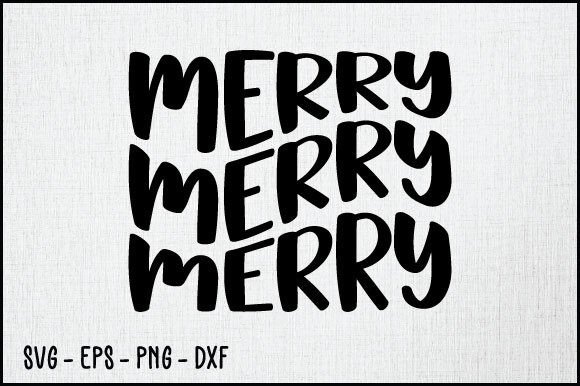
Merry SVG is not a dense, highly detailed illustration. It reads as a friendly, approachable graphic with clear lines and a layout that feels balanced without being stiff. The personality is warm and inviting, making it a natural fit for holiday-themed projects, but I also see it working in winter seasonal products, gift items, and even year-round boutique pieces if the color palette is adjusted. The first impression is that this design was built with versatility in mind—it can scale up or down without losing readability, and the shapes are distinct enough to hold their own in single-color embroidery or multicolor applique work.
Testing Merry SVG on a Real Product: The Tote Bag Scenario
To give Merry SVG a proper field test, I prepped a batch of blank cotton tote bags for a small holiday pop-up. Tote bags are one of those products that customers pick up and inspect closely—they feel the stitching, they run their fingers over the design, and they make a quick judgment about quality. I wanted to see how Merry SVG would hold up under that kind of scrutiny.
I hooped the tote with a medium-weight cutaway stabilizer and used a standard 260-by-200 millimeter hoop. The design stitched out cleanly with a satin stitch for the outer edges and a lightweight fill stitch for the interior shapes. The stitch density felt appropriate—not so dense that it puckered the cotton, but substantial enough to give the design presence on the fabric. The letters and motifs stayed crisp, and there was no noticeable distortion around tight corners or narrow spaces. I tested it in a single bright red thread color on a natural canvas background, and also in a two-color version with white and navy. Both came out looking like finished products you’d see in a boutique or a craft fair booth.
From a customer engagement perspective, the tote bags with Merry SVG embroidery drew more attention than the simpler designs I had on display. People commented on how “finished” and “professional” the stitching looked. That kind of feedback is gold for someone selling handmade or custom products—it tells you the design adds perceived value.
Where Merry SVG Performs Best in Embroidery
Based on my testing and past experience with similar graphics, Merry SVG is a strong candidate for several product categories. Here is where I think it excels:
- Custom apparel – Sweatshirts, t-shirts, and hoodies embroidered with Merry SVG feel like ready-to-gift items. The design sits well on a chest or sleeve placement and doesn’t fight the garment’s natural drape.
- Tote bags and canvas accessories – As mentioned, the clean lines hold up beautifully on medium-weight fabrics. It also works well on aprons and pillow covers.
- Baby and children’s items – The friendly mood of Merry SVG makes it appropriate for baby bibs, onesies, and nursery decor. Just keep the hoop size small and check that the details don’t get lost on tiny garments.
- Embroidered patches – If you produce patches for iron-on or sew-on use, Merry SVG digitizes well as a standalone design. The shapes are distinct enough to cut around cleanly.
- Holiday and seasonal merchandise – This is the most obvious application, but don’t limit it to Christmas. With color changes, it can work for winter markets, seasonal branding, or even birthday and celebration themes if the text is customizable.
- Personalized gifts – Adding a name or small monogram alongside Merry SVG is straightforward because the layout leaves room for customization without overcrowding the hoop.
When to Approach Merry SVG with Care
No design is perfect for every surface, and Merry SVG has a few considerations that I want to flag honestly. If you are planning to use this embroidery file on tricky substrates, here is what I found:
- Small hoop sizes – If you are working with a 100-by-100 millimeter hoop or smaller, check the design’s scaling. The details may compress and the satin stitches could become too narrow, leading to thread breaks or gaps. Always run a test stitchout before committing to a batch of small items like caps or baby onesies.
- Textured or stretchy fabrics – Fleece, knit, or ribbed fabrics can distort the design if the stabilizer isn’t chosen carefully. I recommend a tear-away or cutaway stabilizer with medium to high weight, depending on the fabric stretch. Test on a scrap piece first.
- Dark fabric backgrounds – Merry SVG relies on clear shapes and contrast. On black or very dark fabric, make sure your thread color provides enough separation. White, gold, silver, or neon thread colors work well. Avoid low-contrast combos like dark red on black.
- Curved surfaces like caps – The design has some straight lines and balanced curves. Hooping a cap requires careful alignment so the design doesn’t tilt or warp. I’d suggest a curved hoop system and a test stitch before final production.
- Frequent washing – For items like kitchen towels, aprons, or baby blankets that will be washed often, use a high-quality polyester thread and a dense enough stitch to prevent fraying. A running stitch outline around the fill areas helps stabilize the edges.
How Merry SVG Affects Product Value and Customer Trust
When you sell embroidered products—whether through an Etsy shop, at craft fairs, or as part of a small business line—the design you choose directly influences how customers perceive your brand. Merry SVG has a polished, intentional look that tells buyers you care about detail. That matters more than most new entrepreneurs realize.
I have tested designs that looked fine on screen but stitched out sloppy, with uneven density or distorted shapes. Those designs degrade the perceived value of a product quickly. Merry SVG, by contrast, gave me a finished piece that felt consistent and professional. Customers who bought the tote bags from my test run mentioned the embroidery specifically when they left reviews. That kind of recognition builds trust and repeat business.
For Etsy sellers and small shop owners, using a design that stitches cleanly across multiple product types also means you can create a cohesive product line without reinventing your workflow. You can offer Merry SVG on a sweatshirt, a tote, a pillow cover, and a patch, and the visual consistency ties your shop together. That is good for brand consistency and also reduces the time you spend testing new designs for each product.
Practical Designer Notes Before You Stitch
Before you commit Merry SVG to a production run, here are the steps I recommend every embroidery designer and small business owner take:
- Test on scrap fabric first – Use the same fabric type and stabilizer you plan to use for the final product. Check for puckering, thread breaks, and detail clarity.
- Check thread color contrast – Run the design in black and white mockups to see if the shapes hold their readability. Then test at least two color combinations on the actual fabric.
- Review stitch density – If the design has dense fill areas, make sure your machine can handle them without overheating or breaking needles. Adjust density in your digitizing software if needed.
- Confirm hoop size – Measure the design dimensions and choose a hoop that gives you at least 10–15 millimeters of margin around the stitching area.
- Inspect small details – If Merry SVG has tiny text or thin lines, zoom in during digitizing and verify they are wide enough to stitch cleanly. Narrow satin stitches under 2 millimeters can be problematic.
- Use proper stabilizer – For most woven and knit fabrics, cutaway stabilizer is the safest choice. For stable fabrics like canvas or denim, tear-away may work if the design isn’t too dense.
- Test light and dark fabric backgrounds – A design that looks great on white may disappear on black. Always test both extremes before offering the product in multiple colors.
- Check commercial licensing – Merry SVG is a digital download with SVG, PNG, DXF, and EPS files. Confirm the license terms before you sell finished items or use the design in commercial projects. Some graphics licenses restrict the number of products you can sell or require attribution.
- Consider printable mockups – Since Merry SVG includes high-resolution PNG and EPS files, you can create professional product mockups for your Etsy listings or online shop without stitching every sample first. That saves time and materials.
- Test in single and multicolor – Merry SVG works well in one-color embroidery, which is great for quick production runs. But it also shines with two or three colors. Test both approaches to see which fits your product line better.
Final Thoughts on Merry SVG for Embroidery and Craft Projects
Merry SVG is one of those graphics that crosses the line between a digital asset and a reliable embroidery file with minimal fuss. It is not hyper-detailed or overly complex, but that is exactly what makes it useful for real product work. As a designer, I appreciate when a file doesn’t need hours of cleanup before it can stitch well. As a small business owner, I appreciate when a design consistently comes out looking like something customers want to buy.
Whether you are making personalized gifts for a holiday market, building a line of custom apparel for your Etsy shop, or creating embroidered patches for a local boutique, Merry SVG gives you a solid foundation. It fits naturally into the Crafts category and works well as a Graphics asset because the file formats included—SVG, PNG, DXF, and EPS—cover both digital preview needs and physical production. Just take the time to test it on your specific products, adjust the stabilizer and thread choices for each fabric, and confirm the licensing terms before you start selling finished items. With those steps in place, Merry SVG can be a practical addition to your embroidery project library.