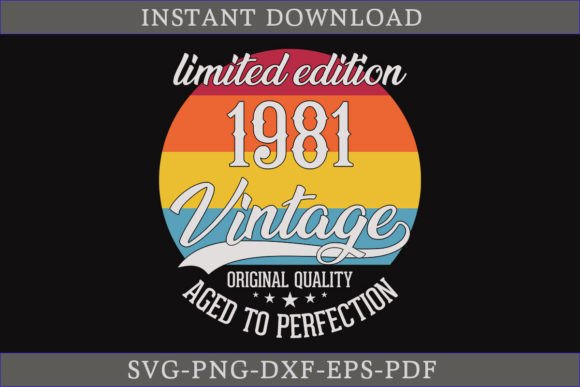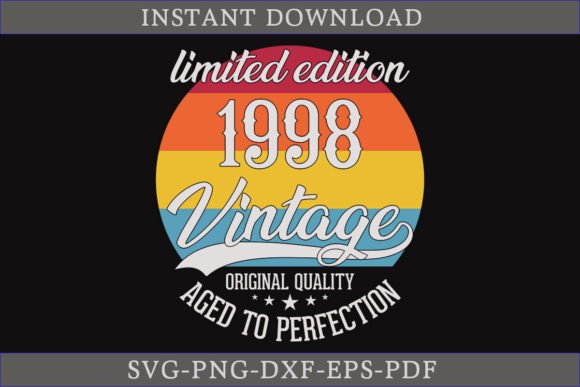
Vintage 1998 Aged to Perfection SVG File
When I unzip a new design kit, I am looking for two things: instant mood and practical adaptability. The Vintage 1998 Aged to Perfection SVG File delivers on both counts. This is a design built for a specific moment—the milestone birthday—but it wraps that moment in a style that feels current and worn-in at the same time. For anyone running a craft business, an Etsy shop, or a commercial embroidery operation, that balance is gold. Let me walk you through what this set offers under the needle and on the sales floor.
First Look at the Design Assets
Right out of the zip file, you get a clean set of formats: SVG, DXF, EPS, PNG, and PDF. For an embroidery designer, this range matters. I use the SVG file to assess the original vector paths and plan my digitizing strategy. The PDF gives me a sharp reference for thread color placement and density mapping before I ever hoop fabric. The PNG is immediately useful for printable mockups—I can drop it onto a product photo of a sweatshirt or tote bag to show customers a preview without stitching a sample.
The aesthetic here centers on the "vintage original quality" promise. The lettering is bold, chunky, and carries a slight distressed or worn character. It feels like a well-loved graphic from the late nineties, which is exactly the emotional hook for someone turning 26, 30, or celebrating a graduation year. The layout is straightforward but has enough presence to stand alone on a shirt back or chest. It sits naturally in the Crafts category because it functions as a foundational piece you can build an entire product line around.
Translating the Graphic to an Embroidery Project
The real test of any design is how it behaves under the sewing field. The Vintage 1998 Aged to Perfection SVG File translates well to both fill stitch and satin stitch applications, but it requires thoughtful digitizing. The solid block letters are ideal for a medium-density fill stitch that gives the embroidery a solid, premium feel. The aged effects and small distressed details in the lettering work best when treated as subtle running stitch accents or very light satin stitch elements.
I tested this design on a structured canvas tote bag and a mid-weight cotton sweatshirt. On the tote bag, the bold footprint of the lettering sat beautifully. The stability of the canvas allowed me to run a clean fill stitch without any puckering. The sweatshirt required a bit more care—I used a cut-away stabilizer to anchor the stitch density and prevent the design from sinking into the fleece. The result was a crisp, professional finish that held up well to handling.
What Shines in the Stitching
This design excels on projects where you want the text to do the talking. Custom apparel like denim jackets, work aprons, and baseball tees are natural homes for this layout. The defined letter shapes and strong kerning mean the design retains its readability even at smaller sizes, though I recommend keeping it as a centerpiece element.
For an embroidered patch, this design is a standout. The clear outer boundaries and solid lettering give you a clean trim line. You can stitch it onto twill or felt, cut it close, and attach it to caps or bags for a retro, handcrafted look. The vintage feel matches perfectly with current fashion trends toward nostalgic and handmade product aesthetics.
Where You Need to Exercise Designer Caution
Not every project is right for this design. The dense lettering and vintage detailing require careful thought about fabric texture and scale. On lightweight or sheer fabrics, the fill stitches can cause puckering or show through the back. Stretchy knits without proper stabilization will distort the bold shapes, especially if you skip an underlay.
Small hoop sizes present a challenge. The full layout is designed for a 5x7 inch hoop or larger. If you are working in a 4x4 hoop, you will need to scale down or break the design into separated elements. Scaling down too much will lose the distressed textures and make the lettering harder to read. Always test the scaled version on scrap fabric before committing to a finished product.
Dark fabric requires attention to thread color contrast. The "aged" aesthetic works beautifully with cream, light gray, rust, or olive thread on black or navy backgrounds. Avoid using dark thread on dark fabric or the vintage effect becomes muddied. A white or light underlay can help pop the design on deeper textiles.
Making the Call for Commercial and Personal Use
For the Etsy seller or small shop owner, this design has strong commercial legs. The "1998 Aged to Perfection" concept is a targeted hook for buyers searching for a personalized gift for a milestone birthday. It tells a story. A product featuring this embroidery file instantly reads as thoughtful and curated, not generic. That translates to higher perceived value and better engagement in your listings.
Because the kit includes high-resolution PNG and PDF files, you can create professional printable mockups for your shop without stitching every variation. This saves time and lets you test different product placements—tote bags, sweatshirts, caps, pillow covers—before you invest in production.
Before you sell any finished items, confirm the licensing for the embroidery file. Clear commercial use terms protect your craft business and let you scale with confidence. If you are creating a limited run of custom apparel or selling design assets as digital products, knowing the usage rights is non-negotiable.
Enhancing Perceived Value in Your Final Product
The success of this design on a finished product comes down to execution. Choose thread colors that reinforce the vintage original quality mood. Solid, matte threads work better than shiny rayon for this aesthetic. Pair the embroidery with natural fabrics like cotton canvas, linen, or sturdy denim to keep the entire product feeling cohesive.
Consider adding a small decorative element if the layout allows room—a simple running stitch border or a small star can frame the text without overpowering it. On a cap or curved surface, reduce the overall size slightly and increase the pull compensation to keep the letter shapes round and even.
Practical Workflow Tips Before You Stitch
Before you run this on a customer order, take the time to test the design thoroughly.
- Test on scrap fabric that matches your final material. Check how the stitch density feels on the fabric texture.
- Check thread color contrast against light and dark backgrounds. A black and white mockup printed from the PDF can help you visualize the balance.
- Confirm your hoop size accommodates the full layout. Adjust scaling only if necessary, and re-test letter readability after scaling.
- Review stitch density in your digitizing software. Dense fill stitches need a stable base. Use a medium-density fill to keep the fabric from becoming too stiff.
- Inspect small details like the distressed accents. These should be clear and intentional, not messy. If they become too small to read cleanly, simplify the design.
- Use proper stabilizer for your fabric type. Cut-away stabilizer is my standard recommendation for sweatshirt embroidery and commercial embroidery on knits. Tear-away works for stable wovens and canvas.
Taking these steps ensures that the finished product looks professional, wears well, and meets the expectations of your customers. A rushed embroidery project can undermine even the best digital embroidery file.
Final Thoughts on the Design
The Vintage 1998 Aged to Perfection SVG File is a thoughtful addition to any designer’s library who works with custom apparel, personalized gifts, or boutique merchandise. It sits at the intersection of nostalgia and clean graphic design, making it a versatile tool for a craft business or an Etsy seller. It is not a design for every project—avoid it for tiny baby embroidery or delicate lace fabrics—but for its intended purpose of bold, memorable text embroidery, it performs with confidence.
This embroidery file gives you a solid foundation to build a finished product that customers will recognize as premium. Pair it with good digitizing, careful stabilizer choice, and intentional thread selection, and you will have a product line that sells itself.